The Uptown Design District: Where Palm Springs’ Glamorous Past Meets Its Dynamic Culinary Future
Uptown Palm Springs has become one of the city’s most distinctive dining corridors — a stretch of North Palm Canyon where restaurants move into historic buildings, mid‑century shells find new life, and modern patios spill out beneath the palms.
What began as a quiet commercial zone of Spanish Eclectic storefronts and early resorts has evolved into a neighborhood defined by food, design, and personality. Today, Uptown’s restaurants don’t just serve the district; they shape it, each one adding its own layer to the story of how this part of Palm Springs came to life.
Early Uptown: Foundations in the 1920s–1940s
Long before Palm Springs became a global resort oasis, the north end emerged as one of its earliest cultural corridors. In the 1920s, the El Paseo Building introduced Spanish Eclectic architecture to North Palm Canyon—a courtyard of artisan shops, shaded walkways, and early eateries anchored by the city’s first movie theater, a space that would eventually become Workshop Kitchen + Bar. Just a few blocks away, the legendary El Mirador Hotel became the glamorous heart of Palm Springs life, drawing Hollywood royalty like Mary Pickford and Douglas Fairbanks to its famed South Pacific Room.
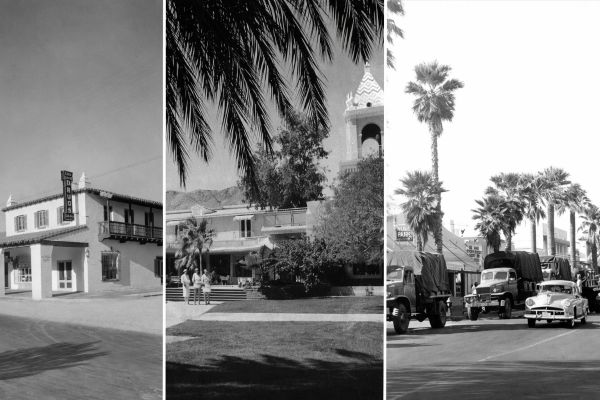
Nearby, The Colonial House opened in 1936. It added its own chapter to the district’s early social fabric, evolving from a mob‑run speakeasy into a mid‑century supper club that attracted the era’s Hollywood crowd. Together, these destinations established the architectural and social foundation that would shape Uptown for generations.
The Mid‑Century Peak: Riviera Era & Rat Pack Glamour
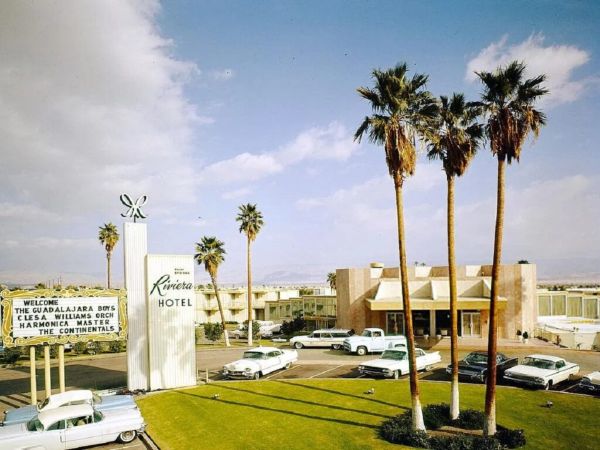
By the mid‑century years, the north end was entering its most iconic chapter. The opening of the Riviera Resort transformed the neighborhood into Palm Springs’ social nucleus, bringing supper clubs, live entertainment, and poolside cocktail culture to the desert. Sinatra, Dean Martin, Marilyn Monroe, and countless entertainers frequented the area, cementing it as the glamorous heart of Palm Springs.
Around the Riviera, boutique motor lodges like the Skylark, the Movie Colony Hotel, and the Pepper Tree Inn (now the Alcazar) created a lively hospitality circuit. These weren’t just places to sleep—they were social hubs where travelers grabbed morning coffee, lounged by the pool, and enjoyed casual meals in shaded courtyards. Many of today’s patios sit directly on the same footprints where mid‑century guests once sipped cocktails under the sun.
A New Neighborhood Dining Identity Emerges
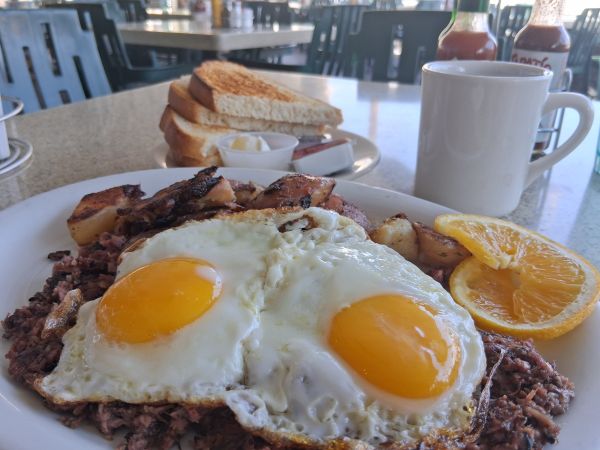
As the glamour era crested, a handful of restaurants began anchoring the north end with a more everyday neighborhood dining feel. One of the few remnants of that era is Las Casuelas Original, which opened in 1958 and sits at the edge of Uptown. Denny’s arrived further north during the mid‑century expansion and remains one of the few national chains from that era still standing in Uptown. By the 1970s, Billy Reed’s added old‑school supper‑club charm, preserving the Rat Pack spirit long after the entertainers themselves had left town. As the decades progressed, places like John’s and Rick’s emerged as reliable neighborhood staples, evidence that the north end was slowly developing a more lived‑in dining culture alongside its vintage retail.
The Quiet Years: 1970s–1990s
By the 1970s, the north end’s mid‑century glamour began to fade. Tourism and retail drifted south toward the newly redeveloped downtown, and the once‑lively Uptown corridor entered a quieter era. For the next two decades, the neighborhood functioned largely as a subdued stretch of antique dealers, vintage boutiques, and aging motor lodges. Much of the earlier Spanish‑style architecture had been remodeled to fit the mid‑century aesthetic, some of which has since been restored to its original character. The bones remained—courtyards, storefronts, long linear commercial shells—but the energy softened. By the time you arrived nearly three decades ago, Uptown was charming but subdued, a district with history in its walls but waiting for a new chapter to activate it.
The Design District Emerges
In the late 1990s and early 2000s, modern furniture stores, vintage dealers, and contemporary galleries began clustering along North Palm Canyon. The architecture—mid‑century storefronts, historic courtyards, long linear commercial shells—lent itself naturally to design retail, and many of the original facades that had been remodeled during the mid‑century years were gradually restored to their earlier character. For a time Uptown was known almost exclusively as the Design District. It was stylish, architectural, and visually expressive. But it needed foot traffic, tourists, and energy. Restaurants brought that energy.
The Culinary Renaissance: 2004–Present
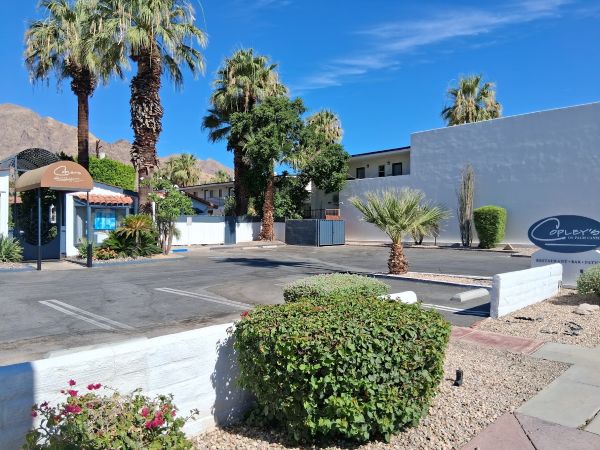
The modern Uptown dining scene took shape when restaurateurs began adaptively reusing historic spaces rather than replacing them. Copley’s arrived in 2004, bringing refined dining to Cary Grant’s former guesthouse and proving that Hollywood lineage could coexist with contemporary hospitality.
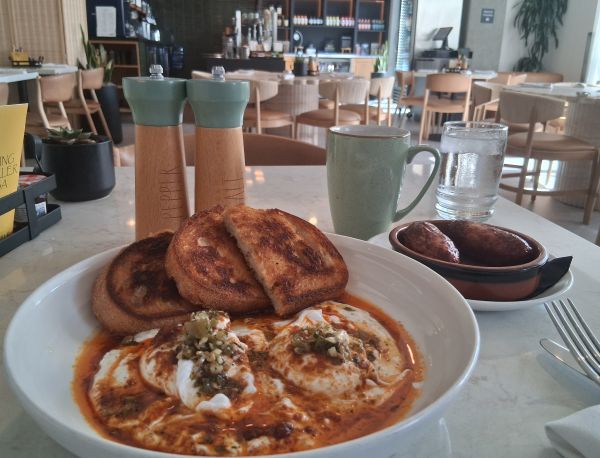
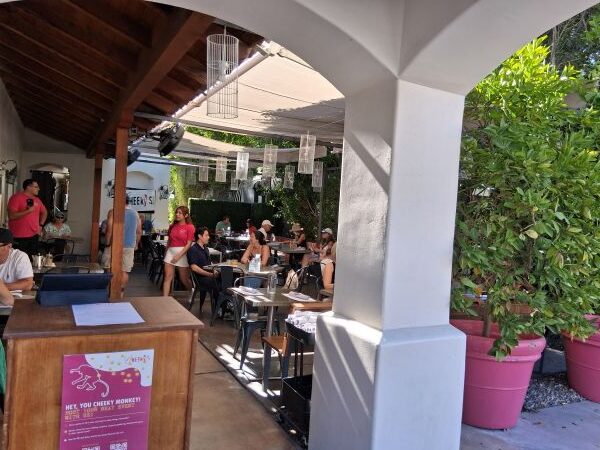
In 2008, Cheeky’s reshaped the desert’s morning culture with farm‑to‑table breakfast and seasonal menus, establishing Uptown as a brunch destination and later earning a place on the Michelin list.
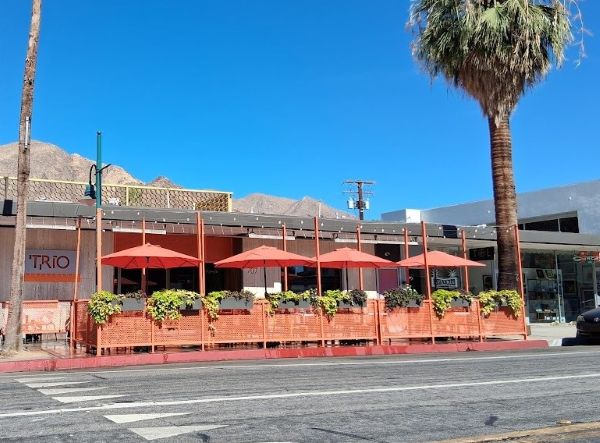
Trio followed in 2009, injecting evening energy into a classic mid‑century storefront and showing how simple architectural lines could support a vibrant social dining concept. That same year, The Shag Store opened next door, creating a playful design‑and‑dining pairing that helped define Uptown’s emerging identity.
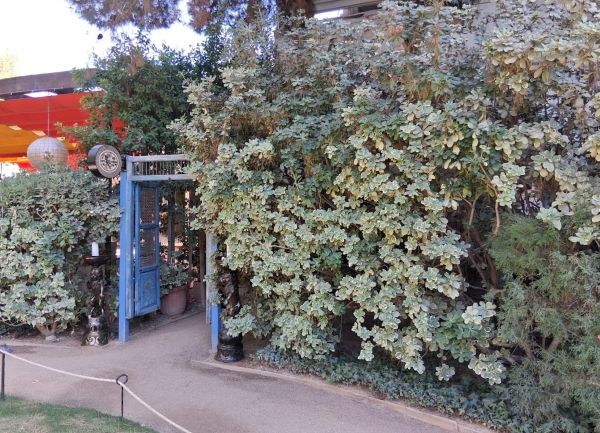
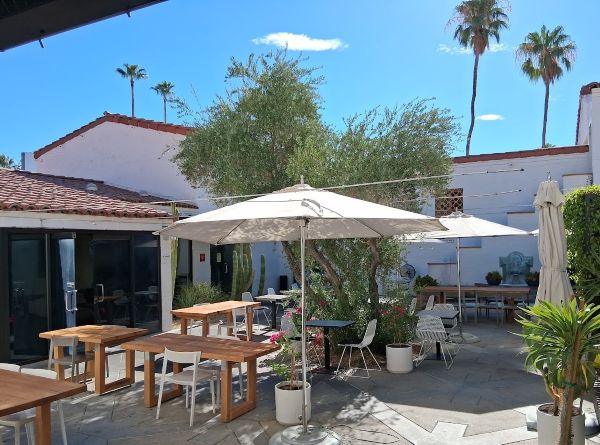
By 2011, the culinary footprint expanded into smaller pockets of the corridor. Jake’s anchored an intimate courtyard scene, while Birba revived Uptown’s historic open‑air dining culture with its tree‑lined patio—a modern continuation of the courtyard DNA first established in the 1920s.
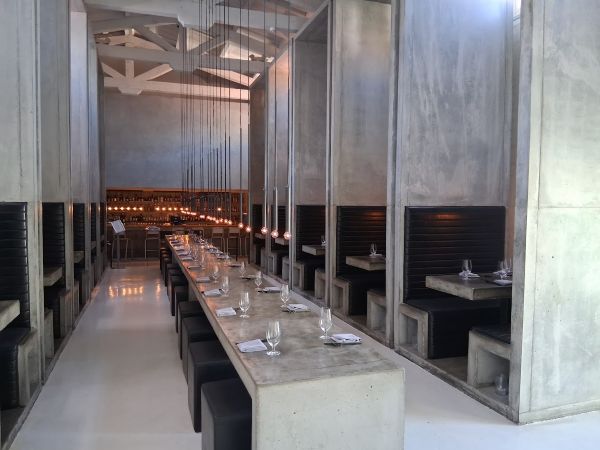
Momentum accelerated in 2012 when Workshop Kitchen + Bar transformed the former El Paseo theater and courtyard. Its James Beard Award–winning concrete interior reimagined the soaring nave of the old cinema as a striking piece of modernist architecture.
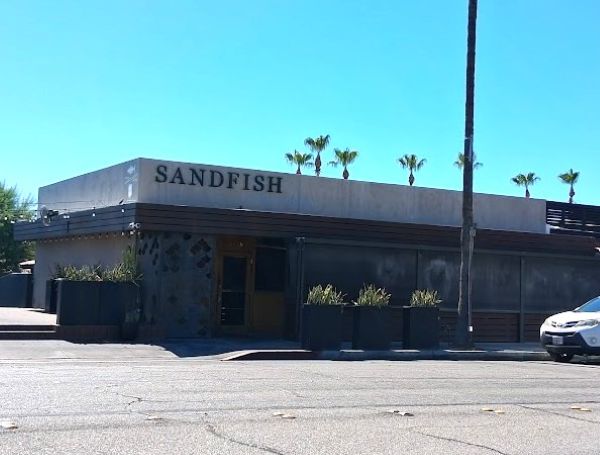
In 2015, Eight4Nine converted a sprawling mid‑century commercial shell into a bold dining destination, giving new life to a building that once supplied the tiles and fountains used to construct the neighborhood’s mid‑century homes. Sandfish Sushi & Whiskey added minimalist Scandinavian‑Japanese precision, while 1501 Uptown Gastropub turned a former Pizza Hut into a polished neighborhood anchor.
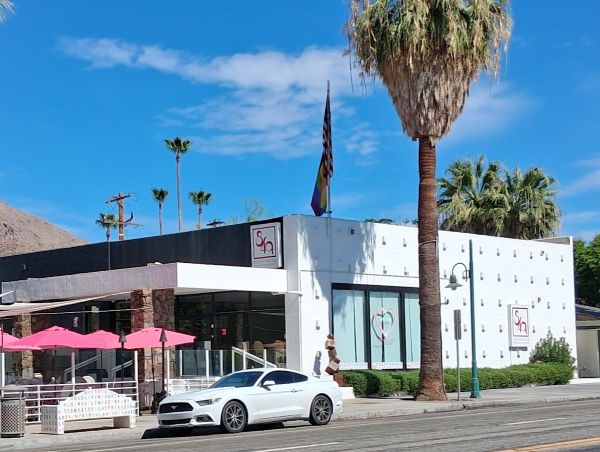
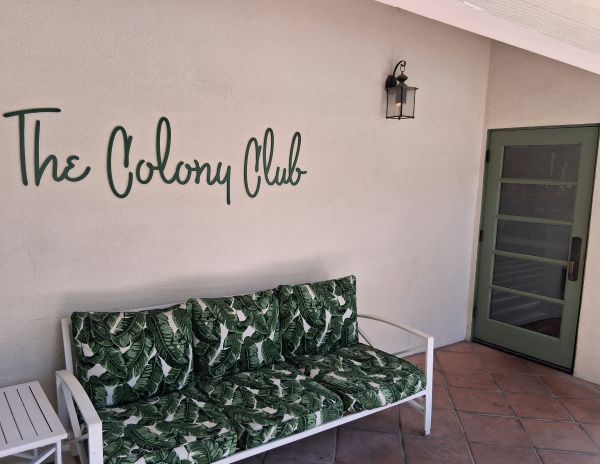
Meanwhile, the historic Colony Club (remember that from our 1930s intro?) reemerged as one of the desert’s most storied dining rooms. After a series of thoughtful modern renovations, it resurfaced in 2020 as a stunning Art Deco–inspired dining room and restoring one of Palm Springs’ most historic culinary landmarks to prominence.
Farther north, Boozehounds revitalized a former mid‑century automotive lot—initially renovated by DINK’s—and evolved into a Michelin‑recognized, dog‑friendly social hub. Crudo, Koffi, and Chicken Ranch expand walkability north of Alejo. And most recently, the Thompson Hotel (with Lola Rose and Bar Issi), and Tac/Quila expanded the corridor’s modern offerings as central Palm Springs seamlessly merged into what was once a sparse stretch of North Palm Canyon.
This movement was never about erasing Uptown’s vintage soul. It was a continuation—architectural, cultural, and social—proving that the historic spaces preserved by earlier generations were destined to become the desert’s most vibrant culinary corridor.
Architecture + Dining: The Uptown Synergy
What makes Uptown uniquely compelling is that its restaurants don’t fight their environment—they harmonize with it. The district’s architectural authenticity gives each concept a foundation to build upon. Workshop amplified the old theater. Colony Club revived a fascinating origin story. Copley’s preserved Hollywood lineage. Birba continued courtyard culture. Trio celebrated its mid‑century storefront. Eight4Nine transformed its commercial shell. Sandfish created modern contrast that makes the surrounding architecture shine brighter. Together, these concepts form a dining corridor defined not by reinvention, but by architectural continuity.
Even the retail landscape mirrors this synergy. Boutique fashion stores, modern design shops, and contemporary art galleries reinforce Uptown’s visual identity, creating a district where design and dining feel inseparable. The corridor has become increasingly walkable and foot‑friendly, with seamless transitions between restaurants, galleries, coffee shops, ice‑cream counters, wine bars, and even a brewery. It’s a neighborhood where architecture gives the concepts character, and the concepts give the architecture purpose.
Uptown Today – A Michelin Hub
Today, Uptown stands as Palm Springs’ most concentrated cluster of chef‑driven kitchens, design‑forward spaces, and historic character. Of the city’s eight Michelin‑listed restaurants, five are in this newly thriving district—Workshop, Boozehounds, Cheeky’s, Tac/Quila, and Colony Club—a concentration that underscores the caliber of its culinary scene. Uptown didn’t just revitalize; it rewrote the playbook on how preservation, community history, and cutting‑edge dining can reinvent a city. It is not simply a neighborhood—it is Palm Springs’ most expressive conversation between past and present.
Uptown Palm Springs is a neighborhood where the past and present sit comfortably side by side — Cary Grant’s former guesthouse next to bold modern sushi, mid‑century storefronts housing Michelin‑recognized dining, and patios that feel as iconic as the architecture behind them. The restaurants here aren’t just places to eat; they’re the heartbeat of the district, defining its energy, its style, and its sense of place. Whether you come for cocktails, sushi, brunch, or a long dinner under the palms, Uptown remains one of the most compelling examples of how Palm Springs continues to reinvent itself through food.
Where to Eat in Uptown Today
These are just a selection of recommended restaurants in the constantly evolving Uptown Design District dining scene. In addition to our list, you’ll find many more fine restaurants, cafés, coffee shops, ice‑cream counters, wine bars, and neighborhood hangouts.
The Michelin’s:
- Cheeky’s — farm‑driven brunch and seasonal menus.
- Colony Club — Art Deco glamour and acclaimed cuisine.
- Boozehounds — dog‑friendly social hub with modern California fare.
- Tac/Quila — vibrant Mexican plates and polished design.
- Workshop — design‑forward dining and modernist precision.
And also Highly Recommended:
- Birba — courtyard energy and wood‑fired Italian.
- Sandfish — architectural Japanese and inventive sushi.
- Eight4Nine — bold visuals and celebratory dining.
- Copley’s — refined dining in a historic estate.
- Lola Rose — stylish Mediterranean‑leaning dining at the Thompson.
- Crudo — raw‑seafood‑driven coastal plates with a sleek, modern vibe.
- 1501 Uptown Gastropub — elevated pub classics in a smart adaptive‑reuse space.
Read also: Where to Eat in Palm Springs: A Local’s Guide
Read also: The Michelin Guide in Palm Springs: Every Restaurant Recognized in 2026